

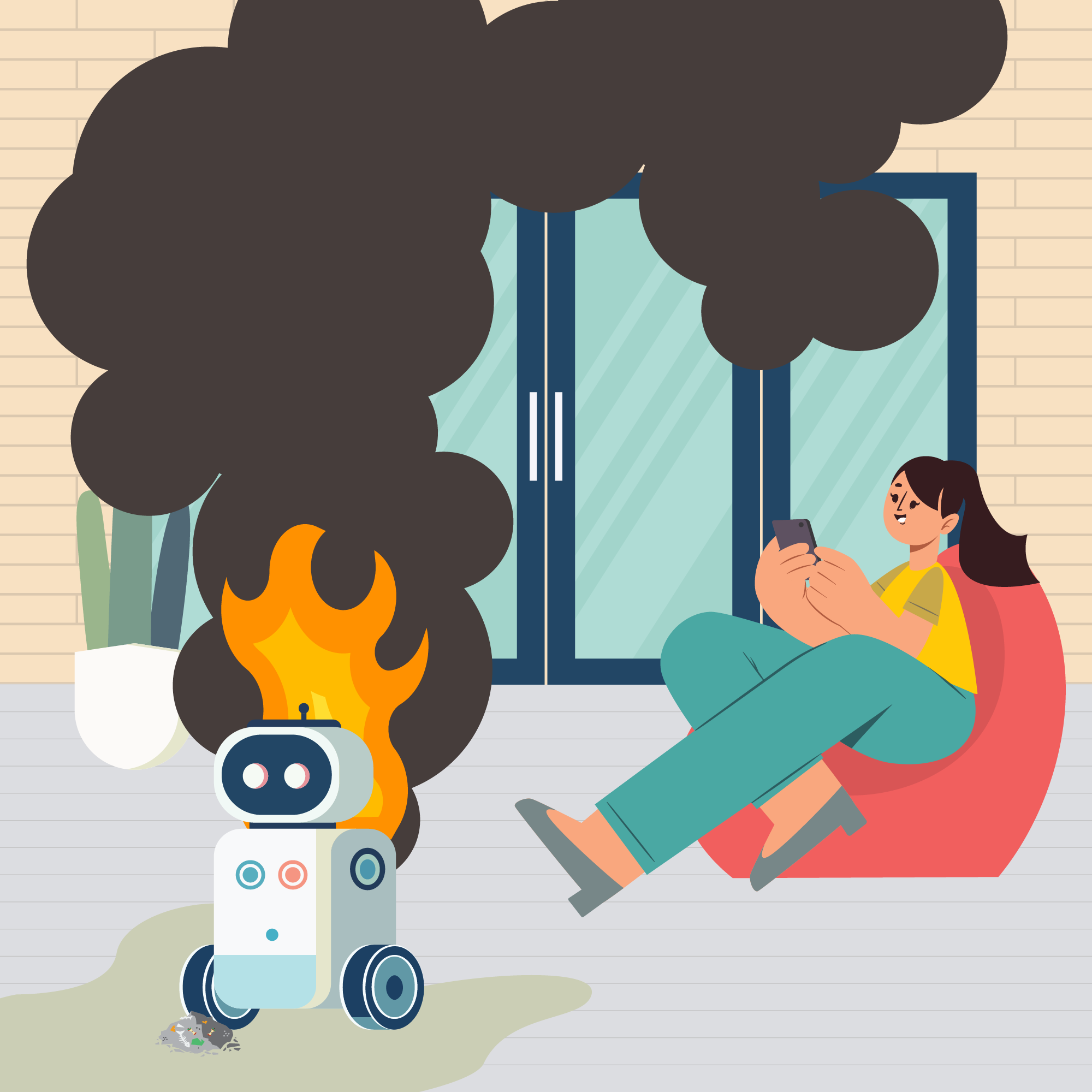
By using Ai to skip genuine design discovery, teams risk solving entirely the wrong problem.
Why the output is persuasive
Nielsen Norman Group ran a controlled evaluation of this exact scenario, testing AI prototyping tools against a real brief from their own site and comparing the results with what an experienced designer produced for the same page. They tested across three categories of tools and four levels of prompt detail, from a broad one-line brief through to a prompt supported by sketches and a Figma frame. Their conclusion was that these tools can follow a prompt well enough to produce something that looks workable, but they cannot weigh a design trade-off the way a designer with context and judgement can.
That distinction may not be obvious when looking at the output. An AI generated screen that looks polished does not invite the same scrutiny as a rough sketch or a wireframe, even when the thinking behind it is non-existent. NN/G found a parallel problem in AI research tools: platforms built without a solid grounding in research methodology produce flawed work presented with confidence, and they do it at scale. The mechanism in prototyping is the same. A solution can be wrong and still look entirely credible.
What gets lost
Jumping straight to a solution can produce something that looks convincing, but without discovery there is no rationale or evidence to support it. Discovery and ideation exist to surface things that a fast, prompted output cannot, including:
- The actual problem, framed from evidence rather than assumptions
- The constraints the solution has to work within
- A reasonable set of alternative directions, so the solution was actually chosen rather than simply the first plausible result
- Evidence that could disconfirm the direction, not only evidence that supports it
Begin from the problem rather than from what a tool happens to be capable of generating. Working backwards from a tool's capability towards a use case tends to produce something disconnected from what people actually need. Writing an accurate prompt requires a deep understanding of the problem. If you already have that understanding, you have already solved the problem.
The real danger is that we build based on assumptions, and assumptions are by definition unsupported by evidence. We need to validate those assumptions before we move forward, not use them to engage a team of designers and engineers.
Why 'it's just a tool' misses the point
The usual defence is that AI is just a tool, and the tool itself isn't at fault. That's true enough, though it misses what's actually being argued here.
NN/G's testing found that even carefully written, well-specified prompts to AI prototyping tools still needed a fair amount of correction and guidance from an experienced designer before the result was usable. A vaguer prompt performed worse again, producing results that were inconsistent from one attempt to the next. A prompt written by someone without design training, and without any discovery behind it, is likely to sit toward the weaker end of that range by default.
NN/G has also warned specifically that over-relying on AI output without questioning it risks carrying blind spots straight through into the product, and that the way to guard against this is to check AI-generated work against real user research rather than accept it because it looks plausible.
The issue teams are running into is treating any fast output, whether AI-generated or not, as a substitute for having validated the problem first. AI just makes that mistake look shinier and more convincing, especially to the uninitiated.
Where this impacts the process
It helps to be specific about what gets skipped, rather than talking about discovery as one vague, undifferentiated stage. Each of these areas fails in a slightly different way, and they tend to compound.
| Risk area | What tends to get skipped | What it costs you later |
|---|---|---|
| Problem framing | Checking whether the stated problem is the real one, rather than a symptom of something else | Building a well-executed solution to the wrong problem, which still has to be unbuilt |
| User needs and context | Talking to anyone who actually does the task the AI-generated screen is designed around | A workflow that fits how the requester imagines the task works, not how it actually works |
| Constraints | Surfacing technical debt, and the regulatory or business rules that shape what's actually feasible | A direction that looks clean in isolation and falls apart the moment it meets the existing system |
| Trade-off reasoning | Weighing one direction against a genuine alternative, rather than accepting the first plausible output | A decision nobody can defend later, because no alternative was ever seriously considered |
| Edge cases and accessibility | Working through what happens for the user who isn't the default case the AI tool assumed | Rework that lands after launch, when it's harder and more expensive to fix |
| Organisational trust | The gradual credibility a design or engineering team builds by being consulted before decisions are made, not after | Teams quietly disengaging from a process that treats their judgement as a formality |
Any one of these on its own is manageable. In practice they tend to show up together, because they all come from the same root cause: a decision made before anyone checked whether it was the right one.
Product design as a discipline
The deeper issue with this pattern is that it treats product design as though its output is the screen, when the screen is really just what's left over once the actual work has happened: a structured process of reducing uncertainty about what to build before committing resources to building it.
That's what discovery and ideation are for. Producing the interface is downstream work; discovery and ideation are where the decisions actually get tested and defended, and the interface is just the visible residue of that.
NN/G's recent writing on this makes a related point about experienced designers who appear to skip process and move straight to intuition. What looks like skipped process is usually process that's been compressed and internalised through years of doing the work properly the first few hundred times. An experienced designer moving fast is drawing on a large, tested library of prior discovery. A PM prompting an AI tool for the first time on a given problem has no such library to draw on, however confident they feel.
What this comes down to is whether a decision that shapes what gets built was actually made with evidence behind it. Tooling, and who's allowed to touch it, is beside the point.
The hidden cost
The person who generated the AI design rarely bears the cost of it. That falls to the design team who get briefed on a solution nobody validated, and to the engineering team who build it out.
Rework is the obvious consequence. The less obvious one is what NN/G points to specifically when discussing regulated and high-stakes work, finance among them: in those contexts, process exists to guard against real harm to real people. Skipping discovery on a low-stakes internal tool is a very different risk to skipping it on something that touches how someone manages their money. There is also a harder problem around walking things back. A rough sketch is easy to discard without anyone feeling like progress has been lost. A polished AI mock-up already looks like finished work, so raising concerns about it later can feel, to whoever generated it, like undoing progress rather than correcting course before it becomes expensive.
One of the main functions of product design is to mitigate risk - to help the company avoid building the wrong thing. A bad idea costs nothing, but building those bad ideas can have a huge impact on the business and its users.
The right approach
AI design tools, including tools used for ideation and early concept work, belong with the design team. Using these tools well depends on already understanding the problem space, and that's exactly what a PM or a leader who hasn't done discovery does not yet have.
A PM prompting an AI design tool is making a design decision, about layout, hierarchy, flow, and priority, without the grounding that makes any of those decisions defensible. Treating the result as a rough draft that gets checked later misses what actually happened, because the decision was made at the point the prompt was written, and a review afterwards doesn't undo it.
The role for a PM sits upstream of design tools entirely: describing the perceived problem, sharing evidence, setting constraints, and then handing that to the design team, who are equipped to explore it, including with AI tools of their own. Ideation using AI still has real value. It just needs to happen within the team who are equipped to understand the problem and users.
Of course this may frustrate some PMs who enjoy playing at design - after all, there is something seductive about typing a few words into a text field, and seeing an agent bring a design together in seconds. However it is a big mistake, that can lead product teams down entirely the wrong path, and should be strongly discouraged.
Sources
- Nielsen Norman Group, "Good from Afar, But Far from Good: AI Prototyping in Real Design Contexts", nngroup.com/articles/ai-prototyping/
- Nielsen Norman Group, "Don't Start with AI, Start with the Problem", nngroup.com/videos/dont-start-with-ai/
- Nielsen Norman Group, "Design Process Isn't Dead, It's Compressed", nngroup.com/articles/design-process-isnt-dead/

No Comments.